UM Directory
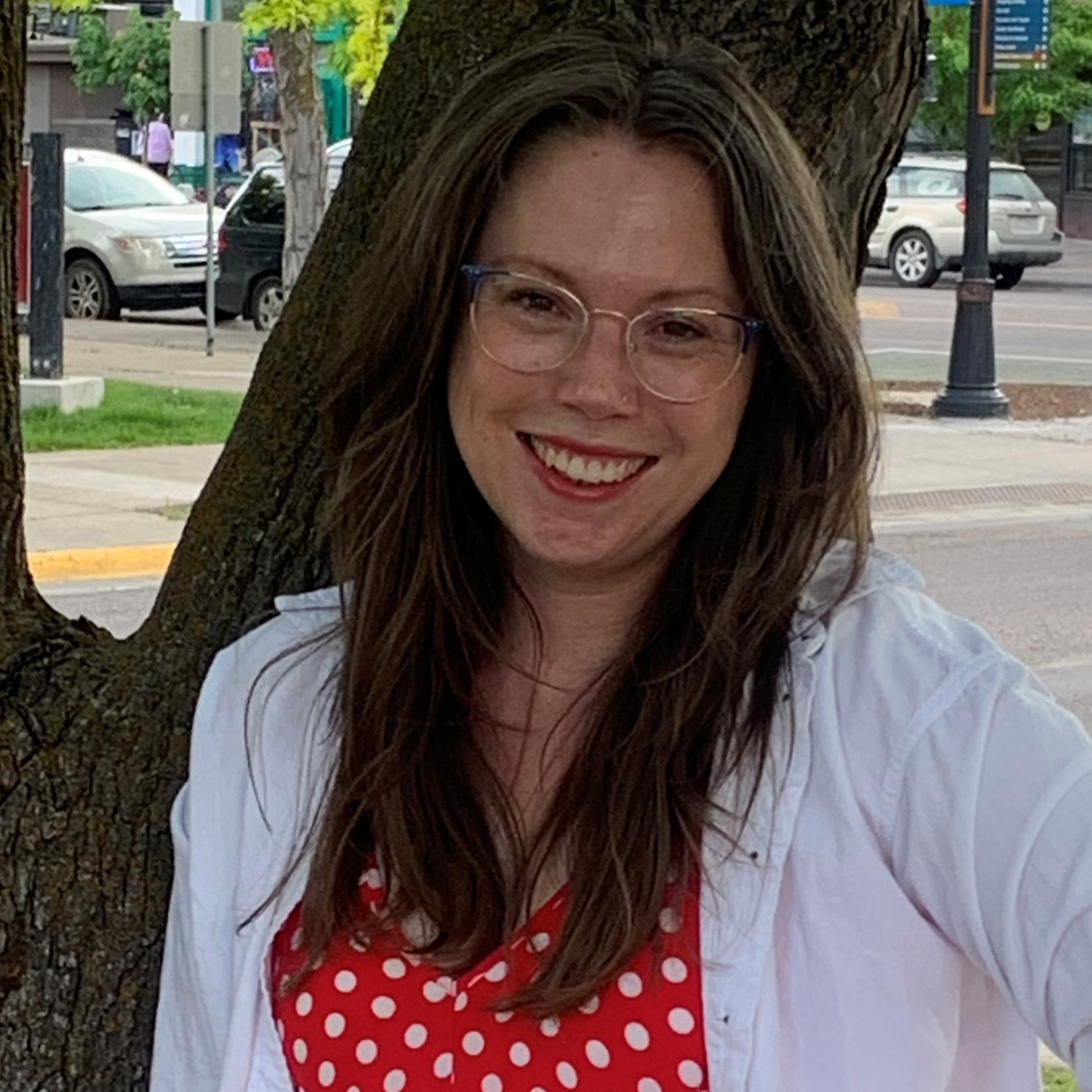
Lillie Greiman
Project Director
Contact Information
- Department:
- Rural Institute On Disabilities
- Email:
- lillie.greiman@umontana.edu
- Phone:
- (406) 243-6102
- Office Hours:
-
I keep irregular hours, please reach out via email.
- Pronouns:
- She/Her
Office Address
Corbin 249
32 Campus Dr MS 7056
Missoula MT, 59812
Lillie Greiman works as a Project Director at the Research and Training Center on Disability in Rural Communities (RTC:Rural) and has been with the center since 2012. She works across numerous projects with partners across the country and is passionate about the collaborative work the RTC:Rural does to improve the lives of people with disabilities in rural communities. Her focus areas are: housing, community participation, rural community development and spatial and demographic analysis.
Education
B.A. Liberal Studies with Southwest Asian Studies focus, University of Montana
M.A. Geography, University of Montana
Research Interests
Disability justice and community inclusion
Community based participatory research
Disabiltiy data equity
Geographic and demographic analysis
Qualitative reseach methods and analysis
Housing, transition, and access to supportive services
Projects
RTC-Rural: Expanding Rural Capacity (2023 - 2028)
- Disability counts
- Building capacity for home usability
- Nursing home closures and access to HCBS
Rural Community Living Development (RCLD)
Montana DPHHS Olmstead Plan
Healthcare for Healthcare workers DPHHS program evaluation
Home Usability Peer Network Collaboration with the National Council on Independent Living (NCIL)
Selected Publications
Greiman, L., Leopold, A., Ipsen, C., & Myers, A. (2023). Mapping the digital divide: What predicts internet access across America?. Local Development & Society, 1-13.
Mashinchi, G. M., Hicks, E. C., Leopold, A. J., Greiman, L., & Ipsen, C. (2022). The intersection of disability status and rurality in American Indian/Alaskan Native communities. Rural Disability and Community Participation, 16648714, 38.
Greiman, L., Ravesloot, C., Shinnick-Goddard, K., & Ward, B. (2021). Effects of a consumer driven home modification intervention on community participation for people with mobility disabilities. Disability and Health Journal, 101210
Greiman, L., Koon, L., Schulz, J. A., & Nary, D. (2021). A usable home: A qualitative investigation of the relationship between home usability and community participation for people with disabilities. Disability and Health Journal, 101211.
Chapman, S. A., Greiman, L., Bates, T., Wagner, L. M., Lissau, A., Toivanen-Atilla, K., & Sage, R. (2022). Personal Care Aides: Assessing Self-Care Needs And Worker Shortages In Rural Areas: Study examines self care needs for people with disabilities and worker shortages in rural areas. Health Affairs, 41(10), 1403-1412.
Johnson, K. B., Greiman, L., VonReichert, C., & Altom, B. (2021). Exploring Access to Independent Living Services for People With Disabilities Through a Transportation Network Analysis. Journal of Disability Policy Studies, 10442073211027527.
Greiman, Lillie. (2017). Data limitations in the American Community Survey (ACS): The impact on rural disability research. Missoula, MT: The University of Montana Rural Institute for Inclusive Communities.
Greiman, L., Fleming, S.P., Ward, B., Myers, A., & Ravesloot, C. (2017). Life starts at home: Bathing, exertion, and participation for people with mobility impairment. Archives of Physical Medicine and Rehabilitation. http://dx.doi.org/10.1016/j.apmr.2017.11.015
Greiman, L., & Ravesloot, C. (2017). Housing characteristics of households with wheeled mobility device users from the American housing survey: Do people live in homes that facilitate community participation? Community Development, 47(1), 63-74.
Greiman, Lillie, " Between Harsha and Harrira: Moroccan Women’s Relationships with Food and Kitchenspace” " (2012). Masters Thesis. Paper 92. http://scholarworks.umt.edu/etd/92
Specialized Skills
- Proficient in accessing, managing, and analyzing a wide range of publicly available datasets such as:
- The American Community Survey and other Census products
- Centers for Medicare and Medicaid Services datasets
- American Housing Survey
- National Center for Charitable Statistics dataset on non-profit organizations
- Spatial analysis using GeoDa and Esri products (ArcPro, ArcMaps, ArcOnline including creating Storymaps and developing data dashboards)
- Qualitative and quantitative research methods and software:
- Qualitative analysis using MaxQDA and NVivo
- Quantitative analysis in SPSS and Excel
- Excellent Microsoft Office skills (Word, Excel, PowerPoint)