UM Directory
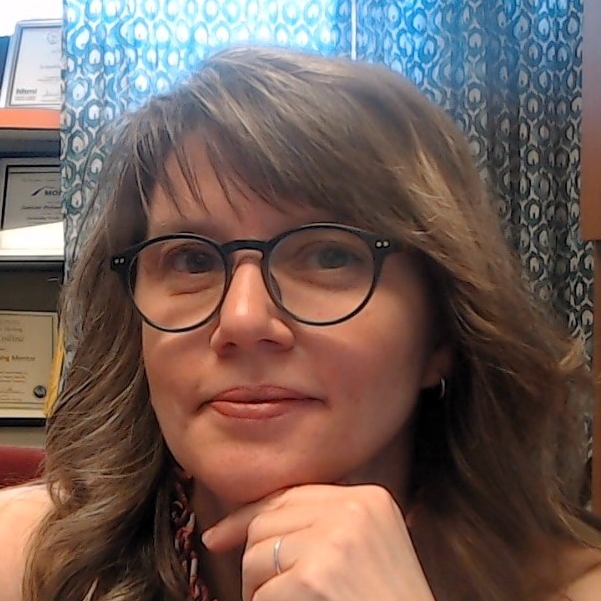
Ginger Collins
Professor/MS SLP Program Director
Contact Information
- Department:
- Slhs-speech Language & Hearing Sci.
- Email:
- ginger1.collins@umontana.edu
- Phone:
- Office Hours:
-
Fall 2026 office hours: 3:30-4:30 & by appointment
Ginger G. Collins, PhD, CCC-SLP is a Professor in the School of Speech, Language, Hearing, and Occupational Sciences at the University of Montana where she directs the MARVEL (Motivational Adolescent Research in Vocabulary & Expressive Literacy) Lab. Dr. Collins is also a founding member of the Structured Word Inquiry Research Vanguard (SWIRV). Before initiating her doctoral program in communication sciences and disorders, Dr. Collins worked as a speech-language pathologist in a variety of settings, including hospitals, schools, rehabilitation centers, Head Start centers, home health, and early intervention programs. Her practical experiences have significantly influenced her desire to further clinical translational research. Dr. Collins has three primary lines of research. The first involves examining the efficacy of Structured Word Inquiry as a literacy intervention. The involves effective, meaningful postsecondary transition planning for students with language/literacy deficits and students who stutter. The third focuses on perspectives of clients who stutter regarding treatment targets. Dr. Collins’s research has been supported through the U.S. Department of Education and the National Stuttering Association.
- Pronouns:
- she/her
Office Address
Curry 021
32 Campus Dr MS 6336
Missoula MT, 59812
Dr. Collins is a native of Baton Rouge, Louisiana. She discovered the field of speech-language pathology after beginning her undergraduate career in Theatre (costuming) and ending it in German. Although she did not immediately realize her calling, she had a few interesting adventures along the way, including sewing costumes for the Mardi Gras Krewe of Apollo and working as an au pair for a year in Germany. After completing her post-baccalaureate leveling program in Communication Sciences and Disorders (CSD) at Auburn University, she returned to Louisiana State University to earn a Master's degree in CSD. Dr. Collins worked for several years as a speech-language pathologist in a variety of settings, including hospitals, home health, nursing homes, Head Start Centers, Early Intervention Programs, and schools. Dr. Collins became motivated to pursue her doctorate in speech-language pathology because she wanted to be an agent of change in the delivery of school-based language-literacy interventions.
Education
2011: Ph.D. in Communication Sciences & Disorders, Louisiana State University
1997: M.A. in Communication Sciences & Disorders, Louisiana State University
1993: B.A. in German, Louisiana State University
Current Position
Professor
Master of Science in Speech-Language Pathology Program Director
Director of the MARVEL Lab
Courses Taught
Summary of Teaching
Since the fall of 2009, I have prepared and taught 13 courses at UM.
- In the fall of 2013, I developed a freshman seminar for the Global Leadership Initiative (GLI). This course fulfilled the Group VII- Social Sciences general education requirement and provided students with an overview of language within the context of the global society.
- I have also repeatedly taught two undergraduate independent studies courses- Pedagogical Methods in CSD and MARVEL Lab Research (formally Adolescent Language Sampling).
I currently teach the following courses:
FALL:
CSD 540: Fluency Disorders
CSD 560: Language and Learning Disorders in School-Aged Children
CSD 498: MARVEL Lab Research (mentored research experience for senior capstone students)
SPRING:
CSD 345: Developmental Speech & Language Disorders
CSD 496: MARVEL Lab Research (mentored research experience for senior capstone students)
A complete list of courses (excluding independent studies and thesis credits) is included in my curriculum vitae.
Teaching Experience
Since the fall of 2009, I have prepared and taught 12 courses at UM and have taught between 8 and 36 credits each year. I have also supervised various independent studies and supervised theses. In the fall of 2013, I developed a freshman seminar for the Global Leadership Initiative (GLI). This course fulfilled the Group VII- Social Sciences general education requirement and provided students with an overview of language within the context of the global society. I restructured two of the courses I teach in response to the need for programmatic changes within our department. CSD 525: Diagnostic Process in Speech-Language Pathology, was changed to CSD 525: Professional Issues in Speech-Language Pathology to cover a broader range of clinical issues, including service delivery models, response-to-intervention, medical record keeping, international classification of functioning, infection control, and the code of ethics. CSD 560: School-Age Language Disorders was altered to include a service learning designation. The course name was changed to CSD 560/SL: Language and Learning Disorders in School-Age Children/Service Learning, to better reflect the course content. In addition to teaching courses, I have served as the primary thesis mentor to graduate students undergraduate students. Many of these students submitted proposals to present their research projects at a national conference, and all submissions were accepted.
I continually strive to improve my pedagogy. I have done this through participation in the UM Pedagogy Project, attendance at local and national workshops and conferences focused on the scholarship of teaching and learning, and enrollment in a course devoted to online teaching strategies. I have secured internal and external reviews of my syllabi, which have been an invaluable source of feedback. I was enrolled in a one-year mentorship program through the American Speech-Language-Hearing Association and was matched with, Dr. Sarah Ginsberg, a leading expert in the scholarship of teaching and learning (SoTL) in the field of speech-language pathology. Her mentorship in SoTL greatly influenced how I cultivated my teaching style. In fact, I have begun to incorporate aspects of SoTL into my research and have agreed to serve as a reviewer for a new journal, Teaching and Learning in Communication Sciences and Disorders.
There are three aspects of my teaching of which I am particularly proud. First, I redesigned the course, CSD 560: Language and Learning Disorders in School-Aged Children so that it included a service-learning component. I am passionate about addressing community needs while teaching students the connections between the course content and application of skills. Students have responded very positively to this course, indicating that the service learning component was very beneficial to their learning. Second, I redesigned a course that was offered on campus, CSD 480: Multicultural Issues in Speech, Language, and Hearing, so that it could be taught fully online. It was challenging to discover ways in which topics traditionally covered in a face-to-face teaching format (e.g., dialect differences, culturally influenced paralinguistic cues) could be effectively taught online. I feel that I met this challenge; in fact, the teaching evaluations for which I received the highest scores were for this course. Further, I was one of 20 applicants selected from an international pool of candidates to participate in a five-day course hosted by the Stuttering Foundation of America. The focus of this course was on effective course development for teaching CSD students about the nature and treatment of fluency disorders. I learned about numerous pedagogical strategies from several leading experts in the field of fluency disorders, which have application across content areas. Lastly, I participated in a week-long Summer Institute on Scientific Teaching offered through the Yale Center for Teaching and Learning in 2018 and was recognized as a Yale Scientific Teaching Fellow 2018-2019.
Research Interests
Language
Literacy
Reading
Writing
Language Impairment
Dyslexia
Interprofessional Practices
Interprofessional Education
Implemntation Science
Adolescent Language
At-Risk Populations
Clinical Education
Projects
I am currently involved in the following projects:
Teenagers' Knowledge of Miranda. This project began in the spring of 2024. The specific aims of this study are to first to document current high school students’ understanding of the Miranda warning as well as their self-perception of their comprehension of the Miranda warning. Three groups will be examined: students receiving language intervention as part of an individualized education plan, student who do not qualify for language intervention but demonstrate below average reading skills, and students with typical reading skills. These students’ language skills and verbal intelligence skills will also be evaluated to investigate the relationship between standardized scores of verbal intelligence, language ability, Miranda comprehension, and non-standardized self-perception ratings of Miranda rights. Analyses of variance and correlational analyses will be conducted to examine group differences and relationships between scores. By determining the strength and direction of these relationships, the research team will identify which subtests are most closely related to Miranda comprehension to inform test selection to identify at-risk adolescents. Next, the research team will use the results of these assessments will inform language-based intervention development designed to prevent at-risk students from an “unknowing, involuntary, or unintelligent” waiver of rights. This educational unit will be delivered to students identified as at-risk, and the efficacy of this unit will be evaluated using a one-way repeated measures ANOVA on subtests of a standardized assessment of Miranda comprehension before and after students participate in unit.
Preparing Secondary Students Who Stutter for Life After School through Individualized Transition Planning. (this project is nearing conclusion)This is a collaborative project with Naomi Rodgers (University of Iowa) in which we are examining current SLP practices when developing Individualized Transition Plans for students who stutter. We are curious to know what goals SLPs are developing for transition-aged students who stutter to prepare them for independent living, community involvement, employment, and postsecondary education and/or training. There is a significant gap in the existing literature on this topic, and results of this project will help us identify whether these students' needs are being met.
Examining the Morphological Matrix for Memory of Words. The purpose of this research is to address practice gaps related to best practices for morphological instruction to support increased literacy in school-age children who are struggling to read. The objective of this study is to replicate Ng et al.'s Morphological Matrix study with 4th and 5th grade students; to compare two methods of teaching English morphology in the context of a memory experiment where words will be organized by affix or base. We aim to identify which word organization facilitates learning to a greater degree, with a control condition that does not highlight the morphological composition of words. The central hypothesis is that memory for morphologically complex words will be best when words have been studied using a base-centric format. The rationale for the proposed research is that there is a need to inform on best practices for morphological intervention in the population of school-age children who struggle to read, in order to provide them with better opportunities for full participation in our literate society.
Field of Study
Speech-Language Pathology
Publications
*Invited publications ◊ Student mentorship □Interdisciplinary
Under Review:
1. Collins, G.G., (under review). Effects of Podcast-Based Instruction on Graduate Students' Knowledge of Transition Needs for Students Who Stutter. Teaching and Learning in Communication Sciences and Disorders. (manuscript ID: 1485)
2. Olszewski, A., Squires, K., Kaldes, G., Parker, J., Ramsdell, H., Collins, G.G., Murphy, K., Maloney, A., Barnett, L., & Brimo, D. (under review). Does Word Presentation Format Impact Recall? A Comparison of Morphological Matrices and Word Lists. Scientific Studies of Reading. (manuscript ID: HSSR-2026-0088)
3. Collins, G.G. & Rodgers, N. (under review). Postsecondary Transition Planning for Students who Stutter: A Survey of School-Based Speech-Language Pathologists. Language, Speech, and Hearing Services in Schools. (manuscript ID: LSHSS-26-00132)
4. □Permar, H., Collins, G.G., Alwell, M., & Closson, J. (under review). Interprofessional Education in Autism Intervention: Pre-Service Speech-Language Pathology and Psychology Students’ Perceptions and Learning. Journal of Interprofessional Care. (manuscript ID: 266319891)
5. ◊Moll, D., Glaspey, A., Collins, G.G., & Wilson, A. (under review). Assessing Speech Production with Single-Word Probes: A Comparison of Six Accuracy Measures Across Treatment with Preschool Children. Language, Speech, and Hearing Services in Schools. (manuscript ID: LSHSS-26-00182)
Published:
1. *McCarren, T., & Collins, G.G. (2026). The Stages We Inhabit: A Lived Experience with Stuttering. American Journal of Speech-Language Pathology, 1-7.
2. ◊Rodgers, N.H., Marsh, D., Jacobs, K., & Collins, G.G. (2025). Preparing Adolescents Who Stutter for the Transition to Life After High School. Language, Speech, and Hearing Services in Schools, 56(3), 666-681.
3. *Collins, G.G. & Powell, R.K. (2024). Best Practices for Teaching Students with Communication Disorders: Who, What, Where, How, and Why. In J.P. Bakken & F.E. Obiakor (Eds.) Teaching Students with Disabilities: Best Practices for Student Success, Cambridge Scholars Publishing.
4. □ Collins, G.G., Mumbauer-Pisano, J., & Kroll, T. (2024). Addressing the Impact of Post-Traumatic Stress on Adolescent Language and Identity: An Interdisciplinary Approach. In Y. Hyter (Ed.) Language Research in Post-Traumatic Stress. Routledge.
5. *Collins, G.G. (2023). Morphological interventions to support literacy from kindergarten to grade 12. Perspectives of the ASHA Special Interest Groups, 8(6), 1205-1219.
6. *□ Collins, G. G. & Ried, S. F. (2023). Using Digital Comic Creation to Improve Adolescents’ Written Narratives. In J.P. Bakken & F.E. Obiakor (Eds.) Using Technology to Enhance Special Education (Advances in Special Education, Vol. 37), Emerald Publishing Limited, Bingley.
7. *Collins, G. G. (2021). Motivating Adolescents to Participate in Literacy Intervention: A Case Example from Telepractice. Perspectives of the ASHA Special Interest Groups, 6(6), 1398-1412.
8. *Collins, G. & Glaspey, A. (2021). Dynamic Assessment of Students with Speech and Language Disorders: Examples for an Educational Setting. In J.P. Bakken & F.E. Obiakor (Eds.) Traditional and Innovative Assessment Techniques for Students with Disabilities (Advances in Special Education, Vol. 36), Emerald Publishing Limited, Bingley.
9. *Meaux, A. B., Wolter, J. A., & Collins, G. G. (2020). Morphological Awareness as a Key Factor in Language-Literacy Success for Academic Achievement. Language, Speech, and Hearing Services in Schools, 51(3), 509-513.
10. *Collins, G., Wolter, J. A., Meaux, A. B., & Alonzo, C. N. (2020). Integrating morphological awareness in a multilinguistic structured literacy approach to improve literacy in adolescents with reading and/or language disorders. Language, Speech, and Hearing Services in Schools, 51(3), 531-543.
11. *Meaux, A. B., Diehm, E., & Collins, G. (2020). Morphological knowledge: Opportunities for collaboration through multitiered system of supports. Language, Speech, and Hearing Services in Schools, 51(3), 515-530.
12. *Collins, G. & Wolter, J.A. (2019). Speech-Language Pathologists’ Role in Promoting Student Participation in Interprofessional Transition Planning Teams. In J.P. Bakken & F.E. Obiakor (Eds.) Advances in Special Education, Vol. 35. West Yorkshire, UK: Emerald Publishing Limited.
13. Collins, G., & Wolter, J. A. (2019). Morphological Awareness Strategies to Promote Academic Success at Tier 1 Through Interprofessional Collaboration. Perspectives of the ASHA Special Interest Groups, 1-9.
14. *Collins, G. & Wolter, J. A. (2018). Facilitating postsecondary transition and promoting academic success through language/literacy-based self-determination strategies. Speech, Language, and Hearing Services in the Schools, 49(2), 176-188.
15. Collins, G., & Norris, J. (2017). Written Language Performance Following Embedded Grammar Instruction. Reading Horizons, 56 (3).
16. *Collins, G., & Wolter, J. A. (2017). Using Multilinguistic Strategies to Improve Decoding in Older School-Age Students in a Contextualized and Motivational Approach. Perspectives of the ASHA Special Interest Groups, 2(1), 105-112.
17. *Wolter, J. A., & Collins, G. (2017). Morphological Awareness Intervention for Students Who Struggle with Language and Literacy. Perspectives on Language and Literacy, 43(2), 17.
18. ◊□ Collins, G.G., Goforth, A., & Ambrose, L. (2016). The effects of teacher professional development on rural students’ lexical inferencing skills. Rural Special Education Quarterly, 35, 3.
19. ◊□ Ambrose, L., Goforth, A., & Collins, G., (2015). Using instructional read-alouds to enhance vocabulary development. Practical Literacy: The Early and Primary Years, 20 (3), 50-52.
20. Collins, G. (2011). An Examination of Errors of Coherence in Adolescent Sentence Combining (Doctoral dissertation, Louisiana State University). Retrieved from: etd-11092011-164128.
Affiliations
American Speech-Language Hearing Association (ASHA)
ASHA Special Interest Groups 1 (Language Learning and Education) and 4 (Fluency Disorders)
Montana Speech, Language, and Hearing Association (MSHA) Board Member
The Reading League, Montana Chapter
International Dyslexia Association
Specialized Skills
literacy assessment and intervention
postsecondary transition planning
Professional Experience
2023-present- Professor & Program Director, University of Montana, Missoula, MT
2016-present- Associate Professor, University of Montana, Missoula, MT
2011- 2016- Assistant Professor, University of Montana, Missoula, MT
2009-2011- Assistant Adjunct Professor, University of Montana, Missoula, MT
2008-2009- Speech-Language Pathologist, Prescott Middle School, Baton Rouge, LA
2007-2008- Graduate Teaching/Research Assistant, Louisiana State University, Baton Rouge, LA. I taught undergraduate courses, supervised graduate student clinicians, and assisted Dr. Jan Norris in child language research in various schools in southeast Louisiana
2005-2007- Clinical Research Supervisor, Louisiana State University, Baton Rouge, LA. I supervised graduate student clinicians, provided clinical education, and assisted Dr. Jan Norris in clinical research projects
2004-2006- Contract Speech-Language Pathologist, Baton Rouge, LA. I provided speech, language and swallowing diagnostic and treatment services for Lane Memorial Hospital, Access to Better Communication, Sage Rehabilitation Institute, and Early Steps early intervention program
1998-2004- Speech-Language Pathologist - Department Head, Lane Memorial Hospital, Zachary, LA. I expanded the department from a single PRN SLP to two full time staff therapists, supervised several graduate students from two universities as well as clinical fellows, diagnosed and treated pediatric, adolescent, adult, and geriatric patients with a variety of speech, language (including AAC), and swallowing disorders in the following settings: acute care, SNF, inpatient and outpatient rehabilitation, home health and in the Lane Nursing Home, performed modified barium swallow studies and newborn hearing screenings daily, served as the staff German interpreter for the hospital.
1998- Speech-Language Pathologist (PRN) River West Medical Center, Plaquemine, LA. I diagnosed and treated pediatric outpatients with language, articulation and phonological disorders
1998- Speech-Language Pathologist- Abbeville Hearing and Speech Associates, Abbeville, LA. I diagnosed and treated pediatric, adolescent, adult, and geriatric patients with a variety of speech, language, and swallowing disorders, with a strong emphasis on dysphagia and language delay. Settings included nursing homes, home health, Head Start, schools, acute care hospital setting, and outpatient speech clinic.
Honors / Awards
Honors, Awards, and Grants
2026 | Collins, G.G., PI. Tobii Screen Based Edition Perpetual License. Funded by the University of Montana Student Instructional Equipment Fee program (SIEF ID: 29790827). Total Award: $7,125.
2026 | Crews, M., PI, Collins, G.G., co-PI, & Midboe, S., co-PI. ASHA’s State Association Grant. Funded by the American Speech-Language-Hearing Association. Total Award: $3500.
2025 | Award for Continuing Education. Awarded by the American Speech-Language-Hearing Association. Collins, G.G.
2025 | Conley, E., PI & Collins, G.G., co-PI. Student Advocacy Day Grant, Funded by the American Speech-Language-Hearing Association. Total Award: $1000.
2025 | Parkes, M., PI & Collins, G.G., co-PI. Student Advocacy Day Grant, Funded by the American Speech-Language-Hearing Association. Total Award: $1000.
2025 | Midboe, S., PI, Damaskos, S., co-PI, & Collins, G.G.. ASHA’s State Association Grant. Funded by the American Speech-Language-Hearing Association. Total Award: $5000.
2024 | Boughey, S., PI & Collins, G.G., co-PI. Student Advocacy Day Grant, Funded by the American Speech-Language-Hearing Association. Total Award: $1000.
2024 | Reynolds, J., PI & Collins, G.G., co-PI. Tobii Spark Eye-Tracking Equipment. Funded by the University of Montana Student Instructional Equipment Fee program (SIEF ID: 29790827). Total Award: $6048.
2023 | Changemaker Session Recognition. Stakeholder Insights into the Transition to Life after High School for Students Who Stutter [Research presentation]. American Speech-Language-Hearing Association Convention, [Boston, MA]. Rodgers, N. H., & Collins, G. G.
2023 | Collins, G.G., PI. High-Schoolers’ Knowledge of Miranda Vocabulary. Funded by the University of Montana University Small Grants Program. Total Award: $5000.
2023 | Award for Continuing Education. Awarded by the American Speech-Language-Hearing Association. Collins, G.G.
2022-2024 | Collins, G.G., PI, & Rodgers, N., co-PI. Preparing Students who Stutter for Life after Graduation. Funded by the Advancement of Clinical Research in Childhood Stuttering (ARC) Award, National Stuttering Association. Total award: $25,000.
2022 | Award for Continuing Education. Awarded by the American Speech-Language-Hearing Association. Collins, G.G.
2022 | Collins, G.G.- Scientific Teaching Mentor. Honor conferred by the Summer Institutes on Scientific Teaching. Yale Center for Teaching and Learning. Total stipend: $750.
2021-2022 | Montana University System Teaching Scholar . Awarded by the Montana University System. Total honorarium: $1500.
2021 | Collins, G.G.- Scientific Teaching Mentor. Honor conferred by the Summer Institutes on Scientific Teaching. Yale Center for Teaching and Learning. Total stipend: $750.
2019 | Montana State Clinical Achievement Award (and Louis M. DiCarlo Award for Recent Clinical Achievement nomination for the state of Montana). Awarded by the Montana Speech-Language-Hearing Association. Collins, G.G.
2019 | American Speech-Language-Hearing Association’s Faculty Development Institute. (a 2.5-day, fully funded workshop for faculty focused on evidence-based teaching in CSD. Participants are selected through a competitive application process.) Awarded by the American Speech-Language-Hearing Association. Collins, G.G.
2019 | Clinical Practice Research Institute Award. Awarded by the American Speech-Language-Hearing Association. Collins, G.G.
2019 | Collins, G.G.- Scientific Teaching Mentor. Honor conferred by the Summer Institutes on Scientific Teaching. Yale Center for Teaching and Learning. Total stipend: $750.
2019 | Collins, G.G. Travel and Registration: 2019 Lilly Conference. Awarded by the University of Montana Faculty Professional Enhancement Program Award. Total award: $1000.
2018 | Collins, G.G.- Scientific Teaching Fellow. Honor conferred by the Summer Institutes on Scientific Teaching. Yale Center for Teaching and Learning.
2018 | Award for Continuing Education. Awarded by the American Speech-Language-Hearing Association. Collins, G.G.
2018 | Collins, G.G., PI. WORD UP: Word study for improved Orthography, Reading Comprehension, and Decoding to Unlock Potential. Funded by the United States Department of Education Improving Teacher Quality Grant, Title II, Part A (CDFA 84.367b). Total award: $6000
2018 | Leadership Academy. Awarded by the Council of Academic Programs in Communication Sciences and Disorders. Collins, G.G.
2017-2018 | Collins, G.G., PI. An investigative language-literacy clinical program: a feasibility outcomes study. Funded by the University of Montana University Small Grants Program. Total Award: $5000.
2016-2021 | Wolter, J. A., co-PI, & Blair, M., co-PI. Collins, G.G., Investigator/Contributing Faculty. University of Montana Online University Training for Rural and Equitable Accessibility in Communication Habilitation (UM-OUTREACH) program. Funded by the Office of Special Education Programs: Personnel Preparation in Special Education, Early Intervention, and Related Services (Number 84.325; K-3—ED-GRANTS-102214-004). Total award: $1,250,000.
2016 | Award for Continuing Education. Awarded by the American Speech-Language-Hearing Association. Collins, G.G.
2026 | Fellowship: Designing Coursework in the Nature and Treatment of Stuttering. Awarded by the Stuttering Foundation. Total award: $2000.
2016 | Outstanding Faculty Advisor. Awarded by the University of Montana. Total honorarium: $1500.
2014 | Award for Continuing Education. Awarded by the American Speech-Language-Hearing Association. Collins, G.G.
2013-2014 | Collins, G.G., PI. Incorporation of Counseling into Adolescent Language-Literacy Intervention: A National Survey of School-Based Speech-Language Pathologists. Funded by the University of Montana University Small Grants Program. Total Award: $2,644.
2013 | Award for Continuing Education. Awarded by the American Speech-Language-Hearing Association. Collins, G.G.
2013 | Collins, G.G. International Travel Award to Present at the Child Language Seminar in Manchester, England. Funded by the University of Montana. Total award: $1500.
2012-2013 | Collins, G., PI, & Goforth, A., co-PI. Improving Vocabulary across the Curriculum through Response to Intervention. Funded by the United States Department of Education Improving Teacher Quality Grant, Title II, Part A (CDFA 84.367b). Total award: $100,000.
2012-2013 | Collins, G.G., PI. Will explicit teaching of discourse structure and discourse markers result in improved composition skills in adolescents struggling with literacy?. Funded by the University of Montana University Small Grants Program. Total Award: $2,166.
2012 | Collins, G.G., PI. Project CHRONICLE: An after-school language-literacy enrichment program. Funded by the Missoula Flagship Program. Total award: $1500.
2009-2010 | Paulson, L.H., PI, Koester, L., co-PI & Collins, G.G., co-PI. Advancing Language and Literacy Skills for Adolescent Students II. Funded by the United States Department of Education Improving Teacher Quality Grant, Title II, Part A (CDFA 84.367b). Total award: $92,188
Hobbies
Dr. Collins enjoys cooking and baking (macarons are a specialty), snowboarding, camping, reading, film noir, and spending quality time with her husband, two children, and rescue-Boxer.