UM Directory
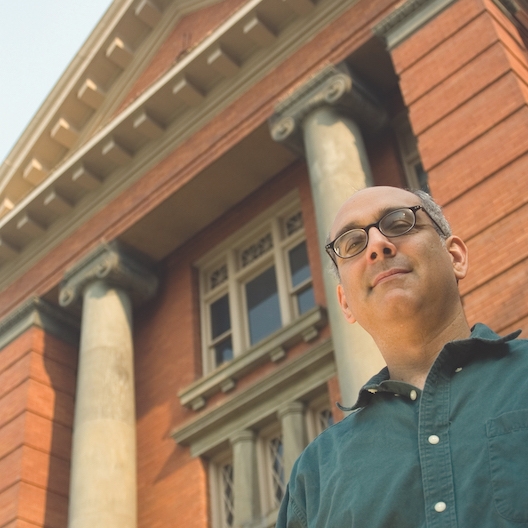
Robin Saha
Associate Professor, Environmental Studies Program
Contact Information
- Department:
- Fcfc
- Email:
- robin.saha@umontana.edu
- Phone:
- (406) 243-6285
- Office Hours:
-
I am currently on sabattical until January 2027 and can be reached by email.
- Pronouns:
- he, him, his
Robin Saha is Associate Professor of Environmental Studies at the University of Montana and its Climate Change Studies Program. He is an environmental sociologist with a policy studies background. He is among the leading scholar-activists conducting quantitative studies of environmental inequality for a wide range of industrial facilities using Geographic Information Systems (GIS). His articles appear in leading social science journals including Demography, Social Problems and Environmental Research Letters. His teaching and research focus on the intersection of environmental justice, health and policy with an emphasis on community engagement and empowerment. He and his students conduct community-based research for and provide technical assistance to contaminated communities. Professor Saha works actively on tribal environmental issues, and he consults on environmental justice legal and regulatory cases, conducts expert reviews for government agencies and provides technical support for nonprofit advocacy organizations performing environmental justice analyses. He also works actively on municipal and campus sustainability issues particularly as related to climate change.
Education
Ph.D., Environmental Policy and Behavior, School of Natural Resources and Environment (SNRE), University of Michigan, Ann Arbor, 2002.
M.S., Natural Resources and Environmental Policy, School of Natural Resources and Environment, University of Michigan, Ann Arbor, 1996.
B.A., Environmental Studies and Planning, California State University, Sonoma, 1989.
Courses Taught
- Environmental Politics & Policies (ENST 367)
- Environmental Citizenship - Service Learning (ENST 476)
- Environmental Justice Issues and Solutions (ENST 489/589)
- Environmental Organizing (ENST 520)
- Local Climate Solutions (ENST 535)
- Ethics of Restoration (ENST 570)
- Montana Environmental Policy: Legislative Processes (ENST 594)
- Environmental Policy Analysis (ENST 594)
- Environmental Justice Issues and Solutions (ENST 598)
Research Interests
My research is primarily devoted to first understanding different manifestations of environmental injustice, i.e., the unfair distribution of “goods” and “bads” in society, as well as the causes and consequences of racial, socioeconomic and gender disparities in environmental quality and access to environmental amenities. My research also seeks to develop effective means for addressing environmental injustices especially through policy change and collaborative community-engaged approaches that foster community empowerment.
I have used two basic approaches in this research.
One involves the development and application of accurate and reliable methods for assessing environmental inequalities, particularly in the distribution of environmental hazards such as polluting industrial facilities. As part of this research agenda, I have helped enhance the capacity of various public interest organizations that work on environmental health and justice issues to conduct credible analytical studies of their own and use them to advocate for related policy reforms (see Recent Publications below), One can also learn about more my quantitative environmental justice research agenda and recent publications in UM's Research View (Pollution Prejudice: UM Researcher Studies How Waste Facilities Target Low Income, Minority Areas) and Environmental Research Letters News (Hazardous Industries Head to Declining Neighbourhoods). Most recently I worked with the Robert D. Bullard Center for Environmental and Climate Justice on a report about the build out of Liquid Natural Gas (LNG) facilities in the Gulf South, tittled Liquifying the Gulf Coast: A Cumulative Impact Assessemnt of LNG Buildout in Louisiana and Texas. My research and a report by the Center for Effective Government that I contributed to were covered in connection with the Flint, Michigan, water crisis: in the Missoulian (UM Researcher’s Work Sheds Light on Disaster), Fortune Magazine (If You're a Minority and Poor, You're More Likely to Live Near a Toxic Waste Site), Huffington Post (How Flint's Crisis Could Help Fight An Injustice Plaguing Minority Communities) and Boston Globe (Flint Evokes the Public Health Racism of Past Years).
The other approach is the use of community-based participatory research (CBPR) with and for communities that are disproportionately impacted by various types of pollution, toxic contamination and the effects of climate change, including tribal communities in Montana. CBPR involves community members in all aspects of the research process and seeks to generate knowledge that can be used by and directly benefit impacted community. Students have been integrally involved and partners and collaborators as well in my community-engaged research, as part of service learning courses and independent and group projects outside of class. Projects and publicayions related to this CBPR are described and listed below.
I am also interested in applied policy research, including policy analyses that inform environmental policy making on various types of sustainability initiatives, and am conducting a study of pedagogies for developing civic competencies in students.
Current & Recent Graduate Student Research
Implementation of lead disclosure policies; water policies in the American West; use of traditional ecological knowledge (TEK) to advance Native Hawaiian rights; white settler colonialism and the National Bison Range; public participation in federal land management; gender diversity and inclusive practices in state and federal natural resource agencies; group process in natural resource collaboratives; strategies for Increasing municpal carbon-free transportion; tribal environmental justice and federal law; net metering policy in Montana; sustainability assessment for Paws Up!; improving Superfund public participation; dental mercury regulation in Missoula, MT; addressing contamination in traditional foods in Alaska; green roof policies for Missoula; addressing non-compliance with federal asbestos building inspection requirements in Missoula, MT; achieving environmental justice for the Superfund community of Opportunity, MT; legislative hisotry and policy analysis of Montana's Renewable Portfolio Standard (RPS) law, The Montana Renewable Power Production and Rural Economic Development Act; advancing environmental education at the U.S. EPA; Creating Connections to Landscapes and Cultures through the Plants of Montana and the Interior Northwest; Equity and Social Vulnerability in Drought Planning and Response in the Northern Great Plains; Groundwater Monitoring Through Citizen Science and Education; natural resource management and tribal sovereignty; institutional and policy analyes of climate adaptation in Bangladesh; watershed sciene, invasive species management, and environonmental education in northern Michigan.
Selected Publications
Wolf, S., Bullard, R., Buonocore, J. J., Donley, N., Farrelly, T., Fleming, J., ... Saha, R. ... & Willis, M. D. (2025). Scientists’ warning on fossil fuels. Oxford Open Climate Change, 5(1), kgaf011.
Covitt, B. A., Frank, N., Bestor, A. G., DeBiasio, S. G., Edmo, T., Kaiser, J., ... & Saha, R. (2025). ResilienceMT: Partnering with Rural and Tribal Communities to Cultivate Youth Climate Resilience Engagement. Connected Science Learning, 7(4), 102-114.
Saha, R., Bullard, R.D., & Powers, L. 2024. Liquifying the Gulf Coast: A Cumulative Impact Assessment of LNG Buildout in Louisiana and Texas. Robert D. Bullard Center for Environmental and Climate Justice.
Mohai, P., Wilson, S., Chakraborty, J., Saha, R., Whyte, K., & Holifield. (2022). Advancing EJScreen. Technical Report prepared for U.S. EPA Office of Environmental Justice [Contract No. EP-W-15- 011; Order No. 4-73 Environmental Justice Research, Analysis, Collaboration and Program Implementation].
Mohai, Paul, and Robin Saha. 2015. "Which Came First, People Or Pollution? Assessing the Disparate Siting and Post-Siting Demographic Change Hypotheses of Environmental Injustice." Environmental Research Letters 10.11: 115008.
Mohai, Paul, and Robin Saha. 2015. "Which Came First, People Or Pollution? A Review of Theory and Evidence from Longitudinal Environmental Justice Studies." Environmental Research Letters 10.12: 125011.
Saha, Robin and Jennifer Hill-Hart. 2015. “Federal-Tribal Comanagement of the National Bison Range: The Challenge of Advancing Indigenous Rights Through Collaborative Natural Resource Management in Montana.” Pp. 143-188 in Mapping Indigenous Presence: North Scandinavian and North American Perspectives. Kathryn W. Shanley and Bjørg Evjen, eds. University of Arizona Press.
Christopher, S., Saha, R., Lachapelle, P., Jennings, D., Colclough, Y., Cooper, C., Cummins, C., Eggers, M., FourStar, K., Harris, K., Kuntz, S., LaFromboise, V., LaVeaux, D., McDonald, T. Real Bird, J., Rink, E., Webster, C. 2011. “Applying Indigenous CBPR Principles to Partnership Development in Health Disparities Research.” Family & Community Health 34(3): 246-255.
Saha, Robin, Kathryn Makarowski, Russ Van Paepeghem, Bethany Taylor, Michelle Lanzoni, Michael Lattanzio, and Owen Weber, 2010. Missoula Greenhouse Gas Emissions Inventory and Analysis, 2003-2008: Toward a Blueprint for Municipal Sustainability. Missoula, MT.
Saha, Robin and Paul Mohai. 2009.” Historical Context and Hazardous Waste Facility Siting: Understand Temporal Trends in Michigan.” Pp. 313-349 in Environmental Crime: A Reader. Rob White, ed. Portland, OR: Willan Publishing.
Saha, Robin. 2009. “Current Appraisal of Toxic Waste in the United States – 2007.” Pp. 237-260 in Urban Health: Readings in the Social, Built, and Physical Environments. H. Patricia Hynes and Russ Lopez, eds. Sudbury, MA: Jones and Bartlett.
Bullard, Robert, Paul Mohai, Robin Saha, and Beverly Wright. 2007 [March]. Toxic Race and Waste at Twenty 1987-2007: Grassroots Struggles to Dismantle Environmental Racism in the United States. Cleveland, OH: United Church of Christ.
Mohai, Paul and Robin Saha. 2007. “Racial Inequality in the Distribution of Hazardous Waste: A National-Level Reassessment.” Social Problems 54(3): 343-370.
Mohai, Paul and Robin Saha. 2006. "Reassessing Race and Socioeconomic Disparities in Environmental Justice Research." Demography 43(2): 383-389.
Saha, Robin. 2006. “Survey Results.” Pp. 79-99 in Improving the State Superfund Process. Montana Environmental Quality Council HJR 34 Study Report [November].
Mohai, Robin and Robin Saha. 2005. “Reassessing Race and Class Disparities in the Distribution of Hazardous Waste Treatment, Storage, and Disposal Facilities. In Conference Proceedings: Waste - The Social Context. Edmonton, Canada: University of Alberta, May 11-14.
Estrada, Torri, Karen DeGannes, and Robin Saha. 2001. “POWER Against the PEOPLE? Moving Beyond Crisis Planning in California Energy.” San Francisco, CA: Latino Issues Forum.
Saha, Robin. 2001. “An Analysis of Environmental Justice Concerns in Downwind Areas Near the Hamtramck Medical Waste Incinerator.” Report commissioned by the Michigan Environmental Justice Coalition (MEJC), Hamtramck Environmental Action Team (HEAT), and Arab Community Center for Economic and Social Services (ACCESS).
Saha, Robin and Paul Mohai. 1999 (May and October). “Disparate Impact Analysis of Gilbraltar Wells #186 Deep Well Injection Site, Smith County, TX.” Report for counsel for Mothers Organized to Stop Environmental Sins (M.O.S.E.S.), Winona, TX, regarding U.S. EPA Title VI Civil Rights Complaint No. 03R-97-R9.
Saha, Robin. 1998. "Accessing and Using Demographic Data to Support Grassroots Environmental Justice Struggles." Detroit, MI: Environmental Justice Community Training Program the Maurice and Sugar Jane Sugar Law Center for Economic and Social Justice.
Mohai, Paul and Robin Saha. 1997. “Public Policy, Social Welfare, and the Incidence of Airborne Pollution in Genesee County Revisited: An Assessment of Methodological Rigor.” Exhibit to Circuit Court of the County of Genesee, Michigan, for NAACP and Flint-Genesee United for Action, Justice, and Environmental Safety vs. Governor John Engler and Michigan Department of Environmental Quality.
Affiliations
- Enviornmental Studies Program (home department)
- Climate Change Studies Faculty Member
- Joint Law/Environmental Studies (JD/MS) Program (EVST faculty advisor)
- UM Center for Natural Resources and Environmental Policy
- UM Conflict Resolution Certificae Program
Honors / Awards
- Thomas Ehrlich Civically Engaged Faculty Award, 2016
- Recipient of Sustainable Campus Committee Greening UM Award, for outstanding participation in creating a sustainable campus, 2012
- American Association for the Advancement of Science (AAAS) Fellowship. 2003
Hobbies
Hiking, biking, camping, gardening, yoga, cooking, canoeing and harmonica.
Brief Bio
In the Environmental Studies Program, we study and learn, but we also make positive social and environmental change happen while we’re studying and learning. As an EVST professor, I love involving students in real-world collaborative problem-solving using service learning, citizen science, action research and policy analysis. My students and I are actively involved in environmental justice causes, local climate action, and campus and community sustainability initiatives. We use community-engaged participatory research to address pressing environmental problems in an ethical way. And because environmental problems disproportionately affect certain places and segments of society, we seek to understand the causes and consequences of racial and socioeconomic disparities, prompt meaningful industry and government responses, and work to empower communities adversely impacted by problems such as toxic contamination and the effects of climate change, including tribal communities in Montana. If studying and working in these areas is something that you are passionate about too, I invite you to contact me or my colleagues and consider applying to our program where you will expand the boundaries of your knowledge and your impact.