UM Directory
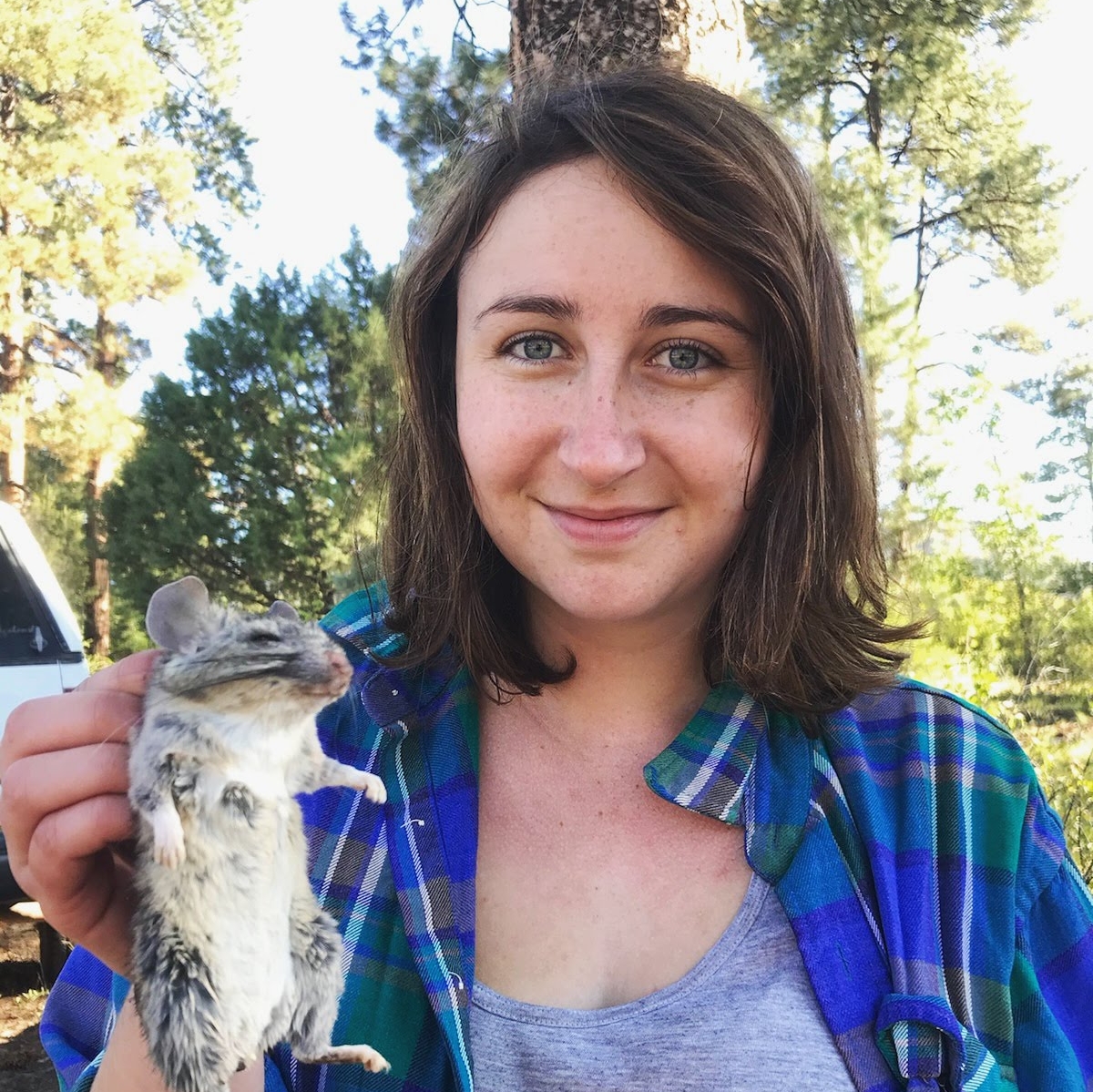
Katrina Derieg
Curator
Contact Information
- Department:
- Broader Impacts Group
- Email:
- katrina.derieg@umontana.edu
- Phone:
- (406) 243-4743
- Pronouns:
- she/her
- Personal Website:
- https://www.linkedin.com/in/katrina-derieg/
Katrina is a museum professional and mammalogist whose work bridges systematics, natural history collections, and public-facing science. She is currently Curator and Museum Collections & Outreach Coordinator at the Philip L. Wright Zoological Museum at the University of Montana, following five years as Collections Manager of Vertebrate Zoology at the Natural History Museum of Utah. Her research focuses on the systematics, phylogeography, and ecology of small mammals of western North America, with broader interests in integrating natural history collections and community-engaged science.
Education
M.S. Biology, University of New Mexico (2021)
B.S. Biology, University of New Mexico (2017)
Courses Taught
ARTH 584 - Natural History & Scientific Collections
This course is part of the Museum Studies Graduate Certificate
This course has two goals: first is to introduce students to the history, preparation, curation, and scientific use of natural history collections; and second is to familiarize students with the basic structure and management of data associated with museum collections. The course leans on vertebrate zoological collections as examples for both goals, as they involve complex physical and data curation. However, the core concepts are transferrable to different types of collections, with different practices and purposes, across disciplines.
Teaching Experience
- Natural History and Scientific Collections (ARTH 584)*, University of Montana (2025, 2026)
- Conservation Biology**, University of New Mexico (2020)
- Ecology & Evolution Lab**, University of New Mexico (2019)
- Mammalogy**, University of New Mexico (2018)
*Primary instructor
**TA/lab instructor
Research Interests
- Small mammal biogeography and evolution
- Mammalian parasite ecology and evolution
- Mammalian disease ecology and evolution
- Innovations in natural history collections
Projects
Small Mammals of Montana: A Modern Natural History Resurvey
The Philip L. Wright Zoological Museum (UMZM) is conducting a multi-year resurvey of historic small mammal trapping localities across western Montana. Over the past 130 years, Montana's ecosystems have experienced significant environmental shifts driven by climate change, altered fire regimes, land-use conversion, and invasive species. This ongoing initiative establishes modern, specimen-based baselines to directly evaluate long-term ecological changes against UMZM’s century of legacy collections.
Research Objectives & Scope
-
Historic Resurveys: Sampling legacy localities across Montana to assess shifts in species distributions, relative abundance, range expansions, and local extirpations.
-
Addressing Distribution Gaps: Targeting historically under-sampled counties and habitats to verify species occurrences where published records remain provisional.
-
Bioindicator Tracking: Monitoring small mammals (< 2 kg) as rapid responders to environmental shifts and fundamental components of local trophic networks.
Methodology & Specimen Integration
-
Field Sampling: Capturing small mammals using a variety of trap types and methods. Field crews record high-resolution spatial and ecological observations—including precise GPS coordinates, habitat conditions, capture context, and non-target encounters—alongside standardized field notes to document locality data for every survey.
-
Holistic Preparation: Field necropsies record standard morphometrics and archive multiple tissue types (flash-frozen in liquid nitrogen), blood samples on Nobuto strips for pathogen screening, and preserved ecto- and endoparasite lots. Specimens are curated as study skins, skeletons, or fluid-preserved vouchers.
-
Open Data & Accessibility: Specimen records and associated ecological data are fully integrated into the Arctos Database and published to global aggregators (GBIF, VertNet, iDigBio) to support state wildlife management, genomic research, disease ecology, and climate forecasting.
Field of Study
Mammalogy, natural history collections, museums, zoology
Publications
Eiriksson, E., Snyder, A. M., Rickart, E., Corneli, P. S., Derieg, K.M., & Zummo, L. 2026. Fox Squirrels in Utah: An Opportunity for Advancing Participatory Science and Forging Community Connections at a Natural History Museum. Citizen Science: Theory and Practice, 11(1), 18-18.
Sussman, J., Derieg, K.M., Perry, K.D., Adakai, A., Corrian, R., Merow, C., Brewer, S.C., Walter, K.S. 2026. Wildlife hosts predict the distribution of reported coccidioidomycosis in the western United States. Preprint available on medRxiv. https://doi.org/10.64898/2026.03.10.26348058
Odom, T.L., Park, A.W., Cook, J.A., Dunnum, J.L., Liphardt, S.W., Derieg, K.M., Parsons, D.J., Greiman, S.E. 2025. Seasonal succession of cestode metacommunities in two North American Sorex shrews. Journal of Parasitology.
Paul, D. L., Thompson, C. W., Arroyo, [et al. including Derieg, K.M.].(2025). Harnessing natural history collections for collaborative pandemic preparedness. BioScience.
McLean, B. S., Bloom, D., [et al. including Derieg, K.M.]. (2025). Extending mammal specimens with their essential phenotypic traits. Journal of Mammalogy, 106(5), 1282-1291.
Conrad, C., Inglis, J., Wende, A., [et al. including Derieg, K.M.]. 2023 Anthropogenic uranium signatures in turtles, tortoises, and sea turtles from nuclear sites. PNAS Nexus.
O’Brien, K.P., Irmis, R.B., Coltrain, J. B., Dalmas, D.M., Derieg, K.M., Evans, T., Richards, E.S., Richards, F.M., Rickart, E.A., Faith, J.T. 2023. The utility of alpine cave fossil assemblages for zoological census: an example from northern Utah, U.S.A. Journal of Mammalogy.
Peterson, D.E., Dunnum, J.L., Liphardt, S.W., Boegler, K.A., Eckerlin, R.P., Hoberg, E.P., Perez-Arrigage, M.O., Derieg, K.M., Garnand, D., Campbell, M.L., Cook, J.A. 2023. A Diverse Flea (Siphonaptera) Assemblage from the Small Mammals of Central New Mexico. Journal of Parasite Biodiversity.
Halm, T. D., Derieg, K. M., Dittmer, D. E., Wilkins, A., Rickart, E.A. 2022. Rediscovery and redescription of the holotype of Crotalus concolor (Midget-faded rattlesnake). Herpetological Review.
Specialized Skills
- Mammal & bird identification
- Mammal & bird specimen preparation
- Small mammal trapping
- Database management
- Collections care
Professional Experience
Curator | Museum Collections and Outreach Coordinator (2025-Present)
Philip L. Wright Zoological Museum, University of Montana
Collections Manager of Vertebrate Zoology (2020-2025)
Natural History Museum of Utah, University of Utah
Graduate Assistant (2018-2019)
Museum of Southwestern Biology, University of New Mexico
Division of Mammals
Teaching Assistant (2018-2020)
Department of Biology, University of New Mexico
(Mammalogy; Ecology & Evolution; Conservation Biology)
Museum Technician (2016-2018)
Museum of Southwestern Biology, University of New Mexico
Division of Birds and Division of Mammals
Technical Intern (2014-2018)
Sandia National Laboratories, Global Chemical and Biological Security (GCBS, formerly IBCTR)
International Experience
El Parque Internacional La Amistad, Panama (2018)
Project: Small Mammal Parasites/Pthogens of Panama | Panama Hantavirus Project
Collaboration with Instituto Commemorativo Gorgas