UM Directory
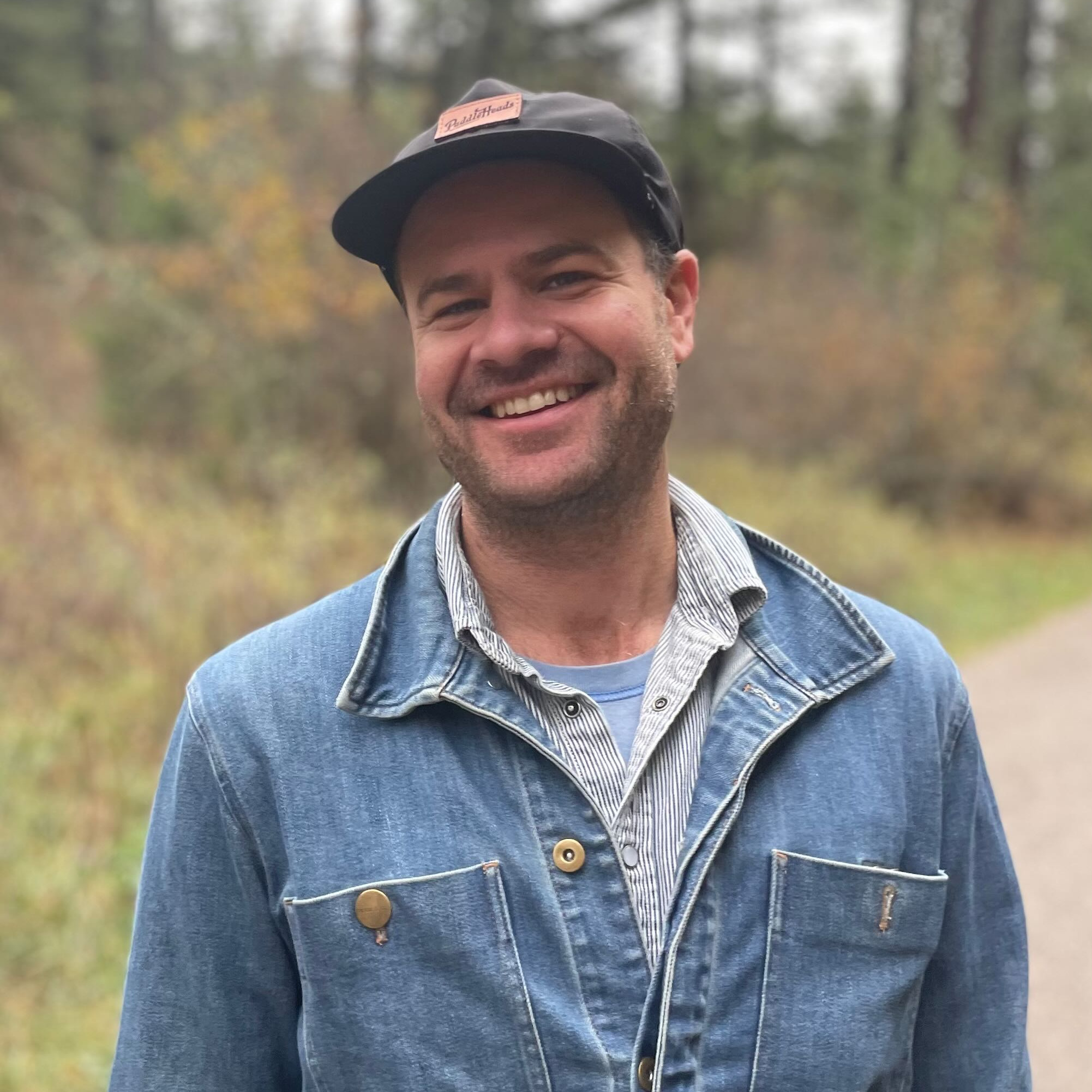
Troy Magney
W.A. Franke Endowed Chair of Forest Conservation
Contact Information
- Department:
- Fcfc
- Email:
- troy.magney@umontana.edu
- Phone:
- (406) 243-5521
Troy Magney is a forest ecophysiologist whose work bridges the fields of tree physiology, ecosystem ecology, and remote sensing. His research program focuses on how plants absorb, reflect, and emit energy to monitor photosynthesis, stress, and carbon cycling across spatial scales. His lab develops new field instrumentation and modeling approaches to track ecosystem function from the leaf to the satellite - contributing to climate and carbon monitoring initiatives and understanding vegetation dynamics in the context of forest management. He likes to tinker, ride bikes, run rivers and recreate on public lands.
Education
- NASA Postdoctoral Program Fellow | Jet Propulsion Laboratory, California Institute of Technology, 2015-2018
- Ph.D. University of Idaho | Natural Resources, Department of Forest, Rangeland and Fire Sciecnes, 2015
- B.A. University of Denver | Physical Geography, Division of Natural Sciences and Mathematics, 2010
Current Position
Associate Professor and W.A. Franke Endowed Chair of Forest Conservation
Courses Taught
- FORS 351 - Environmental Remote Sensing (spring semester)
- FORS 240 - Tree Biology (spring semester)
Projects
California Dept of Forestry | An Integrated Observatory for Redwood Forest Health
- Collaborators: Lawrence Berkeley National Lab, UC Davis, Montana
- Project Duration: 2023-2028
NASA | Smoke and Optics - Assessing ecosystem productivity in the presence of fire-related aerosols through a scaled remote sensing approach
- Collaborators: UC Davis, Montana
- Project Duration: 2025-2028
NSF Center for Pandemic Insights
- Website: https://www.pandemicinsights.org/
- Project Duration: 2025-2032
USDA | Examining Perennial Tree Physiology, Evapotranspiration, and Carbon Dynamics Using Surface-based Measurements and Proximal Remote Sensing Techniques.
- Collaborators: USDA - ARS, UC Davis
- Project Duration: 2023-2027
NSF Integrative Biology
- Title: Integrative Demography: Combining Ecology, Remote Sensing, and Genomics to Understand Population Dynamics
- Collaborators: UC Davis, Montana
- Project Duration: 2023-2027
CalFire Forest Health Program | CARDI-C: Carbon Dynamics Investigator for California: An open‐source platform for tracking carbon uptake and storage across California’s forests
- Collaborators: The Conservation Fund, NASA JPL, Yurok Tribe
- Project Duration: 2022-2025
NASA Making Earth Science Data Records for Use in Research Environments (MEaSUREs)
- Title: Multi-decadal time series of vegetation chlorophyll fluorescence and derived gross primary production
- Website: https://climatesciences.jpl.nasa.gov/sif/
- Collaborators: NASA JPL, NASA Goddard Space Flight Center, Caltech
- Project Duration: 2018-2025
NASA Carbon Cycle Science: Tropical Forest Productivity
- Title: COSIF: Combining Carbonyl Sulfide and Solar Induced Chlorophyll Fluorescence to scale the carbon cycle of tropical rainforests from leaf to landscape
- Collaborators: UCLA and NASA Jet Propulsion Laboratory
- Project Duration: 2021-2025
NASA Carbon Cycle Science: Dryland productivity
- Title: Integrating Field Measurements and Models to Evaluate Solar Induced Fluorescence as a Predictor of Dryland Crop Productivity
- Collaborators: Colorado State University, USDA-ARS
- Project Duration: 2021-2025
Almond Board of California | Remote-controlled evaluation of distribution uniformity and stem water potential: Extending imagery to integrated decision support
- Collaborators: UC Cooperative Extension, U Wisconsin, UC Davis
- Project Duration: 2021-2025
Field of Study
Tree physiology, plant ecophysiology, ecosystem ecology, carbon cycle science, environmental data science, remote sensing, field instrumentation development
Selected Publications
Highlights from the last few years:
105. Svoboda, M., et al. (2025). Monitoring the pulse of America's natural resources from the Orbiting Carbon Observatory missions. AGU Advances, 6, e2025AV002063. https://doi.org/10.1029/2025AV002063
104. Magney, T. S., et al. (2025). Tracking subtle seasonal shifts in pigment composition with hyperspectral reflectance in a temperate evergreen forest. Tree Physiology. Advance online publication. https://doi.org/10.1093/treephys/tpaf108
102. Worden, M. A., et al. (2025). Combining Observations and Models: A Review of the CARDAMOM Framework for Data-Constrained Terrestrial Ecosystem Modeling. Global Change Biology 31, no. 8: e70462. https://doi.org/10.1111/gcb.70462.
100. Klein, M.C., et al. (2025), Climate adaptation in Populus trichocarpa: key adaptive loci identified for stomata and leaf traits. New Phytologist. 247(6), https://doi.org/10.1111/nph.70343.
96. Runkle, B., et al. (2025). Near-surface remote sensing applications for a robust, climate-smart Measurement, Monitoring, and Information System (MMIS). Carbon Management. 16(1) https://doi.org/10.1080/17583004.2025.2465361
95. Pierrat, Z.A., Magney, T.S., et al. (2025), Proximal remote sensing: an essential tool for bridging the gap between high-resolution ecosystem monitoring and global ecology. New Phytologist. https://doi.org/10.1111/nph.20405
94. Magney, T.S., Pierrat, Z.A. (2025). Shifting equilibria in a warming boreal forest. Proceedings of the National Academy of Sciences. 122 (3) e2424669122. https://doi.org/10.1073/pnas.2424669122.
92. Magney, T.S. (2025), Hyperspectral reflectance integrates key traits for predicting leaf metabolism. New Phytologist. 246(2), 383. https://doi.org/10.1111/nph.20345
90. Pierrat, Z. A., Magney, T. S., et al. (2024). Seasonal timing of fluorescence and photosynthetic yields at needle and canopy scales in evergreen needleleaf forests. Ecology, e4402. https://doi.org/10.1002/ecy.4402
89. Wood, J. D., et al. (2024). The Ecosystem as Super-organ/Ism, Revisited: Scaling Hydraulics to Forests under Climate Change. Integrative And Comparative Biology, icae073. https://doi.org/10.1093/icb/icae073
85. Pierrat, Z. A., Magney, T. S., et al. (2024). The biological basis for using optical signals to track evergreen needleleaf photosynthesis. BioScience, biad116. https://doi.org/10.1093/biosci/biad116
82. Klinek, L., et al. (2023). A soil-air temperature model to determine the start of season phenology of deciduous forests. Agricultural and Forest Meteorology, 341, 109638. https://doi.org/10.1016/j.agrformet.2023.109638
81. Au, J., et al. (2023). Forest productivity recovery or collapse? Model-data integration insights on drought-induced tipping points. Global Change Biology, 00, 1–14. https://doi.org/10.1111/gcb.16867
Publications
Please see Google Scholar for complete updated list: https://scholar.google.com/citations?user=Q87VW00AAAAJ&hl=en
Professional Experience
- 2025 - present, Associate Professor and W.A. Franke Endowed Chair | University of Montana | Department of Forest Management
- 2023 - 2025, Associate Professor | University of California, Davis | Department of Plant Sciences
- 2020 - 2023, Assistant Professor | University of California, Davis | Department of Plant Sciences
- 2018 - 2020, Research Scientist | NASA Jet Propulsion Laboratory | California Insitute of Technology | Carbon Cycle and Ecosystems Group
- 2015-2018, NASA Postdoctoral Program Fellow | NASA Jet Propulsion Laboratory | California Insitute of Technology | Carbon Cycle and Ecosystems Group
- 2011 - 2015, Graduate Research Assistant | NASA Idaho Space Grant Consortium Graduate Fellow | University of Idaho | College of Natural Resources
- 2010-2011, Field Instructor | McCall Outdoor Science School | McCall, Idaho